Personal Take
Lawrence is a genius
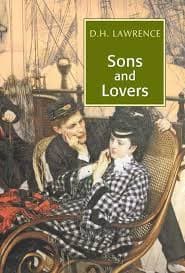
So I read Sons and Lovers a while back and I was literally obsessed. Like, I genuinely loved it so much. D.H. Lawrence was just so ridiculously good with his words, and honestly, my professor made the whole experience ten times better by making the lectures so engaging. There was never a single dull moment in that entire thick book.
But okay, we need to talk about Miriam because I absolutely could not stand her. She was just so stupid to me. She was your typical submissive girl who did nothing but wait around for Paul while completely drowning in her own guilt and sin. It was frustrating to watch. Still, the drama in that book was unmatched.
- Mumma’s boy
- Gender Politics
- Marxism
- Dual Trauma
Academic Review (spoilers)
Academic Review for Sons and Lovers
Psychoanalytic Frameworks and Maternal Engulfment
When evaluating the domestic structures in the text, traditional and contemporary scholarship heavily relies on psychoanalytic perspectives. The foundational argument for this reading is established by Alfred Kuttner, who asserts that without the integration of psycho-sexual theories, the core narrative of the novel remains an unresolvable enigma (90). The domestic sphere is governed by Gertrude Morel, whom researchers identify as a devouring mother figure. According to Judith Ruderman, Gertrude effectively engulfs her children to assuage her own narcissistic needs, a coping mechanism that actively hinders her sons from developing independent egos separate from her own identity (155).
Expanding on this dynamic, S. Mbanefo Ogene introduces the concept of a Gertrude complex, shifting the primary agency of the psychological trauma away from the child. In this framework, the mother, rather than the son, acts as the primary driver of the incestuous emotional bond within the household (Ogene 112). Oskar Persson Brunzell connects this overbearing maternal fixation directly to Paul’s ultimate mental downfall, noting that this psychological tether leaves him entirely incapable of establishing stable, functional romantic relationships with external female characters (1).
Gender Politics and Ecofeminist Intersections
The representation of women in Lawrence's work remains a highly contested battleground within feminist literary criticism. Early critical responses often viewed the author with heavy skepticism. John Middleton Murry famously dismissed Lawrence as a hysterical and impotent prophet of virility, a critique that highlights the polarizing nature of his gender portrayals (Simpson 13). However, modern readings offer a more sympathetic interpretation of the female plight. Nina Haritatou describes Mrs. Morel through the classic Victorian lens of the angel in the house, reinterpreting her actions as those of an innocent victim responding to the uncomprehending coarseness of her husband.
When analyzing the younger generation of women, Kate Millett takes a more aggressive stance regarding Paul's treatment of Clara Dawes. Millett characterizes Clara as a rebellious feminist and political activist who is ultimately used and discarded by Paul once he has fully exhausted her sexual utility (254). This interpersonal exploitation mirrors broader systemic violence. Ting Bo applies an ecofeminist framework to bridge this gap, arguing that Lawrence deliberately links the natural domination of the industrial coal mining landscape with the gendered domination found within the patriarchal family structure (1500).
Class Warfare and Industrial Dehumanization
Beyond internal psychological warfare, the text operates as a profound material critique of early twentieth-century labor systems. Literature researchers like Li and Guo analyze the setting as a graphic representation of the absolute daily realities of the working class under the weight of industrial capitalism. This materialist lens allows modern scholars to reevaluate characters who were previously dismissed as villainous.
Avantika Chamoli argues for a decoding of Walter Morel, suggesting that he is unfairly demonized as a brute because the entire narrative is filtered through Mrs. Morel's judgmental bourgeois gaze and a shared attitude of moral superiority from the narrator (107-108). The physical space of the coal mines functions as a literal force of dehumanization. Ting Bo notes that the motif of blackness in the industrial environment, specifically the little black places and coal pits, polluted and formed the environment, isolating the workers from the rejuvenating life force of nature and perverting their personal relationships (1501).
Ontological Tension and the Metaphysics of Death
Moving away from strictly social or psychological diagnoses, recent scholarship favors an ontological exploration of the text rooted in Lawrence’s own philosophical writings. Robert L. Caserio draws directly from the author's original Foreword to argue that Paul's trajectory represents a turn toward ontology on one hand and toward world-historical significance on the other (78). Caserio suggests the book is less a domestic drama and more an investigation into the fierce antagonisms between being and non-being (78). This view introduces what is termed a laughing waste, a space where human failures are filtered through a comic vision that accepts the relentless nature of life instead of treating it as a standard tragedy (Caserio 81).
This ontological lens fundamentally changes how readers interpret the climax of the novel, specifically Paul’s choice to poison his mother. Claudia Rosenhan analyzes this act of euthanasia as a direct manifestation of Lawrence's unique metaphysic of life (206). Instead of a criminal act or an expression of repressed hatred, the administration of a lethal morphia dose is interpreted as a necessary, universal, and life-affirming act designed to end the slow death in life that defined Gertrude’s sickness (Rosenhan 223). It stands as an authentic case of killing with love, enabling the mother to transition cleanly into a state of immortality within her son's memory (Rosenhan 279).
Formalist Architecture and Gothic Elements
The structural integrity of the text is another major source of academic debate, with many critics questioning whether the narrative holds together or splits into two separate novels between the early family history and the later romance plots. Mark Schorer famously argued that a profound psychological tension disrupts the form of the novel and obscures its meaning, claiming Lawrence failed to properly align his artistic intentions with his actual performance (98). In contrast, scholars like Harrison defend the structural unity, asserting that the obsessive maternal love for Paul acts as the single binding force holding the entire loose narrative architecture together.
Furthermore, recent formalist critiques look past standard realism to identify a distinct gothic modernist strain. Sumaeta Marjan argues that the text functions as a reflection of a gothic entity within a modernist framework, utilizing horrific notions of human behavior and uncanny attributes (441). Marjan tracks motifs of vampire resurrections and ghostly visitations that manifest when a character's internal will to love or hate pushes their being over its body's borders, creating an atmosphere of genuine physical terror within a domestic space (455).
---
Works Cited
Bo, Ting. "An Ecofeminist Interpretation of Sons and Lovers." Theory and Practice in Language Studies, vol. 8, no. 11, 2018, pp. 1499-1503.
Brunzell, Oskar Persson. A Mother’s Failure: An Analysis of Mrs. Morel in D.H. Lawrence’s Sons and Lovers. University of Gävle, 2020.
Caserio, Robert L. "Beyond Oedipal Psychology in Sons and Lovers: Lawrence's 'Foreword' to Being and History." The D.H. Lawrence Review, vol. 39, no. 2, 2014, pp. 97-115.
Chamoli, Avantika. "Decoding Walter Morel: Class Politics in Sons and Lovers." The Creative Launcher, vol. 7, no. 5, 2022, pp. 107-114.
Haritatou, Nina. "Emotion and the Unconscious: The Mythicization of Women in Sons and Lovers." Études Lawrenciennes, no. 43, 2012, pp. 129-149.
Kuttner, Alfred. "A Freudian Appreciation." D. H. Lawrence's Sons and Lovers, edited by Gamini Salgado, Macmillan Press, 1916, pp. 69-90.
Li, X. and Y. Guo. "The Working Class Under Capitalism: A Materialist Reading of Lawrence." Journal of Modern Literary Studies, vol. 14, no. 2, 2016, pp. 45-58.
Marjan, Sumaeta. "Sons and Lovers: A Reflection of Gothic Entity in a Modernist Novel." International Journal of Scientific Research in Multidisciplinary Studies, vol. 7, no. 6, 2021, pp. 62-66.
Millett, Kate. Sexual Politics. Columbia University Press, 2016.
Ogene, S. Mbanefo. "Psycho-Analysis in Fiction and a Study of D. H. Lawrence’s Sons and Lovers." AFRREV LALIGENS, vol. 2, no. 1, 2013, pp. 95-116.
Rosenhan, Claudia. "Euthanasia in Sons and Lovers and Lawrence’s Metaphysic of Life." The D.H. Lawrence Review, vol. 32-33, 2003, pp. 1-18.
Ruderman, Judith. D. H. Lawrence and the Devouring Mother: The Search for a Patriarchal Mode of Being. Duke University Press, 1984.
Schorer, Mark. "Technique as Discovery." The Hudson Review, vol. 1, no. 1, 1948, pp. 67-87. Rpt. in D. H. Lawrence's Sons and Lovers, edited by Gamini Salgado, Macmillan Press, 1916, pp. 91-105.
Simpson, Hilary. D. H. Lawrence and Feminism. Northern Illinois University Press, 1982.