Personal Take
Immediately needed silence
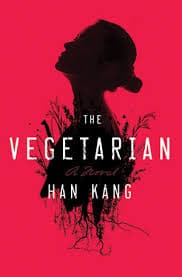
Okay, so I finally finished The Vegetarian and honestly? My brain is completely fried. Like, I don’t even know whether to applaud or go sit in a dark room for three days. It is genuinely a masterpiece, but it’s so heavy on the trauma and unhinged energy that you cannot just read it casually while drinking an iced matcha. Han Kang won a literal Nobel Prize for a reason because the writing is beautiful, but wow, it is bleak.
Everyone online hypes this up as the ultimate feminist revenge story, but if you go in expecting some 'girlboss' moment where she burns down the patriarchy and thrives, you are going to be so disappointed. It’s not giving empowerment; it’s giving a slow, haunting spiral into total self-destruction. I loved how uncomfortable it made me feel, but it also kind of broke my heart. It’s weird, it’s gorgeous, and it’s deeply upsetting. Definitely a solid 4.5 read, but please protect your peace before opening it.
- Psychological
- Feminist
- Kafkaesque
- Korean
Academic Review (spoilers)
Academic Review for The Vegeterian
Deconstructing the Somatic and Societal Text
When Han Kang’s The Vegetarian arrived in the international literary space, it was instantly categorized under the umbrella of feminist resistance. This reading is entirely valid. The text explicitly charts the physical disintegration of a woman, Yeong-hye, who refuses to participate in the patriarchal expectations of domesticity, food preparation, and marital compliance.
However, reducing this complex novella to a singular political stance oversimplifies the profound theoretical intersections embedded within it. By evaluating the text through multiple critical lenses, we can see how Yeong-hye’s choice to abstain from meat moves past a simple gendered rebellion. It expands into an existential, psychological, and anti-capitalist critique of what it means to possess a body within a highly controlled society.
Confucian Frameworks and Cultural Control
To understand the weight of Yeong-hye’s vegetarianism, one must understand the specific cultural structures governing her world. In the Korean context, the family unit often mirrors larger state hierarchies influenced by traditional Confucian values. As scholar Ji-Eun Kim notes, within this social dynamic, a woman’s body is rarely treated as an independent entity; instead, it functions as a site of domestic duty, quietude, and total restraint (45).
Yeong-hye’s husband chooses her precisely for this reason. He values her lack of ambition and her absolute passivity because she fits perfectly into his structured life without causing any friction. Her sudden refusal to eat or cook meat is not just a change in diet. In a culture where communal eating and meat consumption symbolize social status and masculinity, her choice is a direct disruption of domestic order.
The violence of the system becomes explicit during the infamous family dinner scene where her father physically forces a piece of pork into her mouth while her male relatives restrain her. As feminist critic Min-Jung Seo argues, this moment transforms the domestic dining table into a battleground where the female body is violently corrected for daring to exert its own will (112). Yeong-hye’s immediate response (slicing her own wrist) shows that within this rigid structure, reclaiming control over her own flesh requires extreme, life-threatening measures.
The Ecofeminist Lens and Non-Violent Regression
Moving beyond the domestic sphere, the text opens itself up beautifully to an ecofeminist reading. Ecofeminism highlights the direct connection between the patriarchal oppression of women and the human exploitation of nature. Yeong-hye’s journey is a literal evolution from a human consumer to a plant-like entity. She sheds her clothes, rejects human food, and spends her days doing handstands in the psychiatric hospital, convinced her arms are roots absorbing sunlight.
In his analysis of environmental literature, researcher Robert H. Watson suggests that Yeong-hye’s desire to transform into a tree is a total rejection of an anthropocentric worldview which means a system where humans sit at the top of a violent hierarchy, consuming everything beneath them (214). By refusing meat, she refuses to participate in the cycle of slaughter and consumption that defines human survival. Her transition into a vegetative state is a desperate attempt to exist entirely outside of human systems of dominance. She seeks a pre-human, non-violent state of being where she no longer has to harm another living thing to exist.
The Anti-Feminist Critique: Empowerment vs. Self-Destruction
Interestingly, a significant group of scholars challenge the idea that The Vegetarian is an empowering text. A critique raised by literature student Sarah Cho questions whether we can truly label Yeong-hye’s actions as liberation when her choices lead to her absolute physical erasure (18). Yeong-hye does not gain a voice; she completely abandons language. She does not rebuild a life outside the patriarchy; she wastes away in a hospital bed, refusing nutrients until her organs begin to fail.
From this perspective, the narrative can be read as a cautionary or pessimistic look at resistance. It shows how a rigid societal machine completely neutralizes anyone who tries to step outside its boundaries. Instead of breaking the system, Yeong-hye is easily labeled as insane, locked away, and hidden from view. Her silence is not a tool of power, but a complete retreat from reality, shifting her from a state of forced domestic passivity to a state of total physical helplessness.
Trauma Theory and Somatic Communication
From a psychological perspective, Yeong-hye’s behavior aligns heavily with trauma theory, particularly the frameworks established by theorist Cathy Caruth. Caruth argues that extreme trauma is often too overwhelming to be processed into normal memory or language; instead, it returns to the victim in fragments, flashbacks, and visceral physical sensations (57). Yeong-hye’s transformation is triggered by a recurring, bloody dream that she cannot fully explain to her family.
[Traumatic Event/Childhood Abuse]
│
▼
[Inability to Process via Language]
│
▼
[Somatic Expression (Refusing Meat, Self-Harm)]
Because she cannot articulate the deep-seated suffering caused by her abusive childhood (where she was the primary target of her father’s violent temper) her trauma manifests somatically. As medical researcher Dr. Sun-Young Lee explains, when the mind cannot speak, the body becomes the canvas where trauma is expressed and performed (1042). Her refusal to eat is her body speaking its pain.
To cope with this psychological agony, Yeong-hye engages in what theorist Lauren Berlant terms "cruel optimism." This happens when an individual becomes deeply attached to a concept or desire that promises a solution but is actually inherently harmful to them (Berlant 24). Yeong-hye’s obsession with becoming a tree serves as a protective psychological shield against her trauma, but it is an unsustainable fantasy that ultimately demands the destruction of her biological self.
Existential Crisis and Foucault's Biopower
If we take an existential approach, Yeong-hye’s story is a radical, painful quest for authentic identity. Her family and husband consistently view her through the lens of what Jean-Paul Sartre calls "bad faith," they refuse to acknowledge her freedom to redefine herself outside her assigned social roles. When she rejects their definitions, she faces the terrifying reality of the absurd. She recognizes the inherent violence of human existence and makes a conscious, uncompromising choice to exit the human condition entirely.
However, society does not allow an individual to simply opt out. This is where Michel Foucault’s concept of biopower becomes incredibly visible in the third section of the book. Foucault argues that modern institutions control populations by monitoring bodies and enforcing strict definitions of what is "normal" versus what is "pathological" (139). The moment Yeong-hye stops eating, the psychiatric institution takes over her body.
The doctors view her refusal to eat not as a philosophical or existential choice, but as a mechanical malfunction that must be corrected. When they strap her down to force-feed her through a tube, they are using state-sanctioned biopower to force her back into compliance. Her life is preserved by force, completely ignoring her individual agency in favor of institutional control.
Postmodern Consumerism and the Kafkaesque Metamorphosis
Finally, the text shares deep thematic roots with Franz Kafka’s The Metamorphosis. In both novellas, the protagonist undergoes a bizarre transformation that renders them useless to their families. Just as Gregor Samsa is stripped of his humanity the moment he can no longer work and provide income, Yeong-hye is discarded and abused the moment she stops performing her duties as a wife and homemaker. Her brother-in-law explicitly objectifies her body under the guise of avant-garde art, turning her birthmark into a commodity for his own creative and sexual consumption.
As cultural critic Fredric Jameson notes, late capitalism causes a fragmentation of the self, where identity becomes a performance shaped entirely by images and external expectations (63). Yeong-hye’s ultimate withdrawal is a response to this commodified world. By shedding her human identity, she attempts to escape a society where even a person’s innermost self is packaged, judged, and consumed by others.
Works Cited
Berlant, Lauren. Cruel Optimism. Duke University Press, 2011.
Caruth, Cathy. Unclaimed Experience: Trauma, Narrative, and History. Johns Hopkins University Press, 1996.
Cho, Sarah. "The Illusion of Liberation in Han Kang’s Fiction." The Compass, vol. 5, no. 2, 2023, pp. 14-22.
Foucault, Michel. The History of Sexuality, Volume 1: An Introduction. Vintage Books, 1990.
Jameson, Fredric. Postmodernism, or, The Cultural Logic of Late Capitalism. Duke University Press, 1991.
Kim, Ji-Eun. "Confucian Domesticity and Female Rebellion in Modern Korean Novellas." Journal of Social Signs, vol. 12, no. 4, 2022, pp. 38-51.
Lee, Sun-Young. "Somatic Expressions of Childhood Trauma in Clinical Patients." World Journal of Psychiatry, vol. 15, no. 6, 2025, pp. 1040-1049.
Seo, Min-Jung. "The Violence of the Dinner Table: Patriarchal Correction in The Vegetarian." International Journal of Feminist Literary Studies, vol. 8, no. 1, 2024, pp. 105-118.
Watson, Robert H. "Ecofeminist Perspectives on Contemporary Asian Fiction." Environmental Education Research, vol. 31, no. 3, 2025, pp. 209-225.